
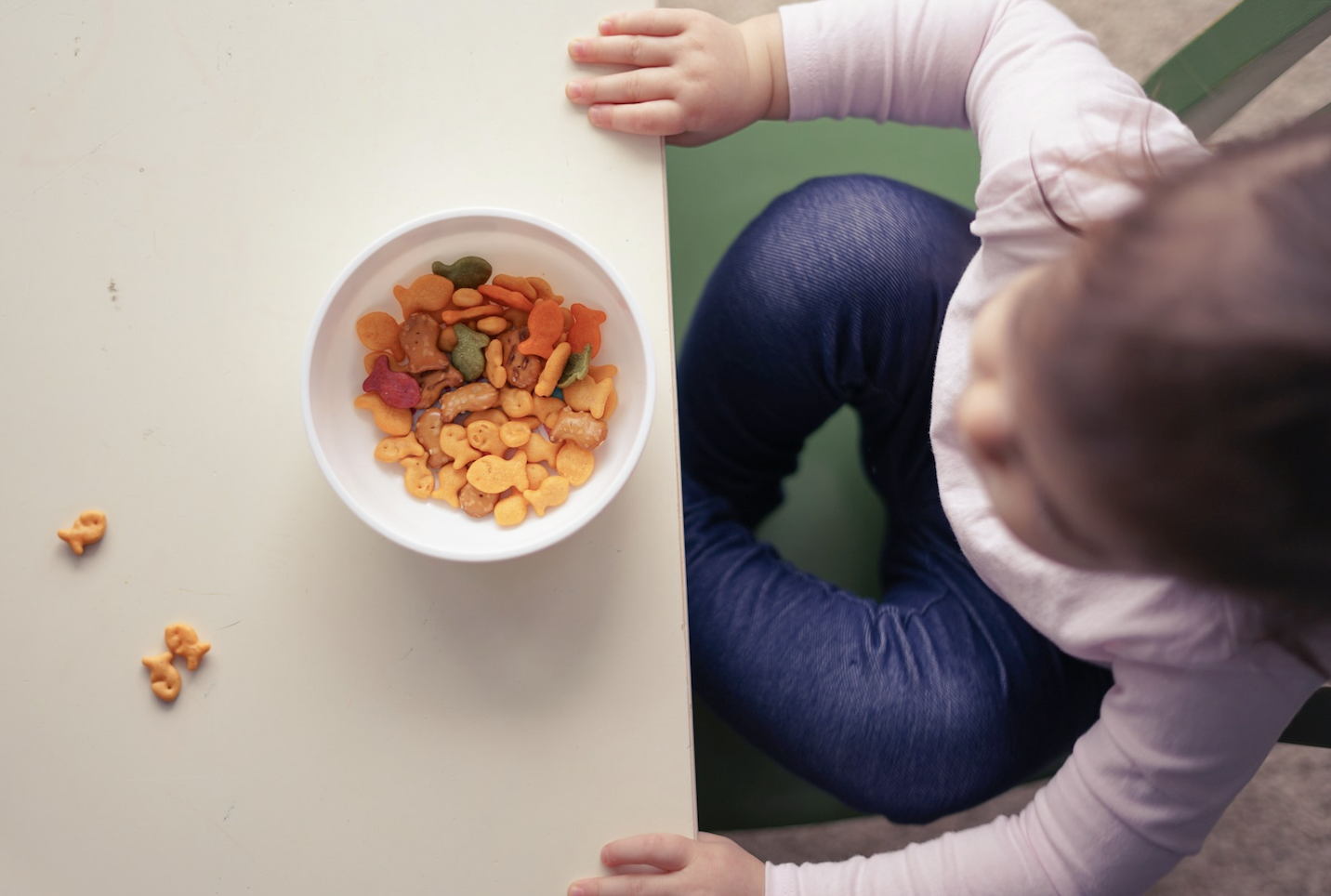
 Your kid comes home from school, and they’re starving. Instead of eating a small meal to tide them over until later, they search the pantry for some potato chips. Or, after when they claimed they were full after a few bites, they manage to have enough room to eat a bowl of ice cream—sprinkles and hot fudge included, of course. Sure, kids like to eat snacks, but is it okay for kids to eat a lot of snacks? You probably already know the answer.
Is it okay for kids to graze?
Anytime is the right time for a snack. They can satisfy your sweet tooth or give you the crunch you’re craving. But it’s when snacking surpasses eating healthy meals that it becomes a problem. “Typically, it’s not recommended for children (or adults) to graze on food all day,” says Caitlin Self, MS, CNS, LDN, a licensed dietitian/nutritionist. “The constant stream of energy can keep glucose elevated and disrupt hormone communication.” Self points out that it’s important to give your belly a break so that there isn’t a constant flow of food putting your digestive system into overdrive. “We want to give the digestive tract a break so it can complete its cleaning cycle, known as the migrating motor complex,” she adds. “It works in 90-minute waves and won’t function if there’s food in the digestive system.”
And if the snacking seems endless, it can prevent kids from really knowing when they’re full. “Kids should eat when they are hungry and stop when they are full,” says Dr. Charnetta Colton-Poole, MD, FAAP, a pediatric hospitalist and outpatient pediatrician in Sandersville, GA. “If kids graze all day, even when they are not hungry, they miss the normal hormonal cues and triggers which can lead to overeating.”
What could cause kids to eat extra snacks?
Sometimes, snacking isn’t about hunger at all. In fact, emotional eating is a major cause of overeating, Colton-Poole points out. “Stress due to family situations, illness, etc. can lead to emotional eating,” she says. “If this is the case, you should talk to child and help them work through their emotions.” Food shouldn’t be used as a coping strategy or a way to create calm or normalcy.
Boredom also plays a role in the amount of snacks your child consumes. “Watch for overeating due to just being home or boredom,” says Dr. Alison Mitzner, MD, a board-certified pediatrician. “Try to introduce activities for your kids as a distraction to see if that changes their eating habits.”
A lack of sleep can also contribute to overeating. “Make sure your child is getting enough sleep at night,” Mitzner advises. “Lack of sleep can increase snacking and eating as it disrupts the hormones regulating appetite and hunger cues.” Keeping a normal bedtime routine can help structure a better sleep schedule that will prevent excessive snacking.
How many snacks should your child eat?
Snacks aren’t a bad thing, unless they’re unhealthy. “When it comes to overeating, it’s important to remember that most children are only going to overeat addictive foods, especially those that are processed,” Self explains. “The number one way to prevent children from overeating is to serve real food in its whole or mostly whole form.” And if your child really wants Cheetos, serve it in smaller portions. “Parents are responsible for when children eat and what they are served,” she continues “Children are responsible for if they eat and how much they eat. If you keep those guidelines in mind, it becomes a lot easier to avoid micromanaging meals!”
As your child grows, you might see them perusing your pantry more often, and that’s normal. “There are times, like during growth spurts and rigorous activity/sports, when kids may have an increased caloric need,” Colton-Poole explains. “Generally, kids should eat 3 balanced meals a day with 2-3 healthy snacks.”
How can parents prevent overeating?
If you’re looking for ways to end the overeating, here are some tips from the experts:
Set out the snacks.
“Create a grazing tray with fruits, vegetables, and protein, which you can store in the fridge and take out at the designated meal and snack times,” Self recommends. “Make sure it has foods on it that you’re comfortable with your children eating as much of as they want!”
Be a role model.
You can’t expect your child to cut down on snacks when you’re also indulging. “You are your child’s greatest role model,” says Mitzner. “Stick to your normal routine including diet as much as possible.”
Stick to a schedule.
“It’s better for children to have scheduled meal and snack times,” says Mitzner. “Maintain normal routines as much as possible, including meals and snacks.”
Dedicate a snacking spot.
“Eat in your dining area or where you normally would eat to limit overeating,” says Mitzner.
Snacks are fine — grazing all day isn’t. A little structure, some real-food options, and helping kids notice when they’re actually hungry can make a big difference. And that can be delicious for both your body and mind.